



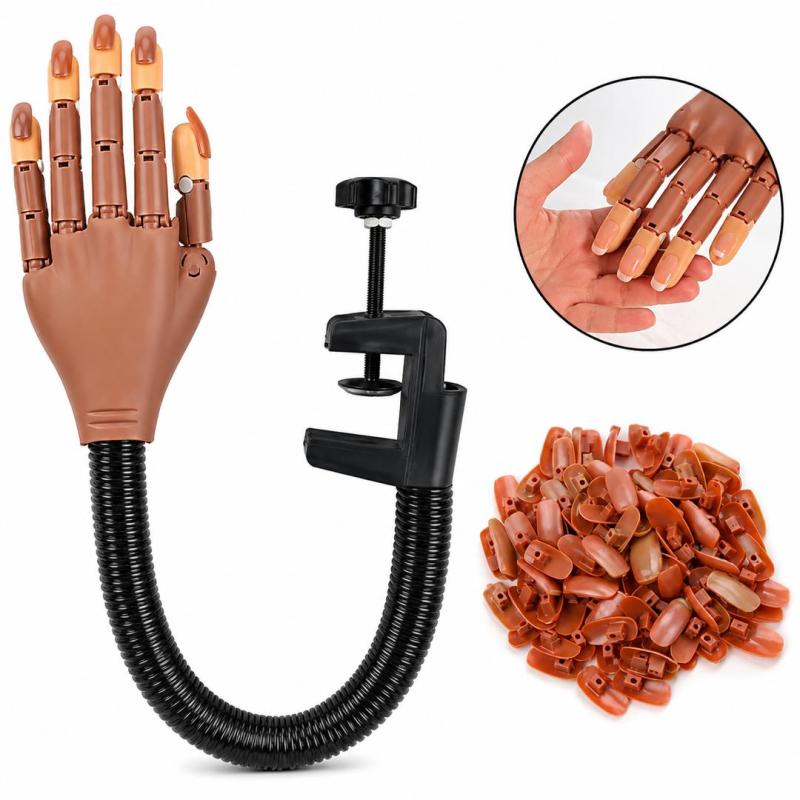
Professional Nail Practice Hand
₦20000
Ideal for: Nail-tech students, beginners, experienced nail technicians, nail-art practice, salon training, demonstrations, content creation and improving speed and precision.
A realistic nail training hand designed for nail technicians and students to practice and improve their manicure and nail-art techniques without needing a live model.
The flexible finger joints allow different hand positions, while the included clamp helps secure the practice hand to a table or workstation. It is suitable for practicing gel polish, acrylic application, nail extensions, shaping, filing, nail art, French tips and other salon techniques.
The set shown includes the practice hand, adjustable table clamp, flexible support, and multiple interchangeable practice fingertips/nails.
What you may not like
* It is a practice hand, so the feel will not be exactly the same as working on a real client’s hand.
* The interchangeable practice nails/fingertips may require proper positioning before use.
* Beginners may need a little time to get comfortable with the hand’s flexibility.
* The clamp needs to be tightened properly to prevent movement during detailed work.
How to use
1. Set up the clamp: Position the clamp firmly on the edge of a stable table or nail workstation. Tighten it until it is secure but avoid excessive force.
2. Attach the practice hand: Fix the flexible support of the practice hand into the clamp and adjust the hand to a comfortable working angle.
3. Prepare the practice nails: Select the appropriate practice nails/fingertips and position them correctly on the fingers. Make sure they are firmly seated before beginning your work.
4. Practice preparation: Treat the practice nail as you would a natural nail. Practice your preparation routine, including shaping, surface preparation and removal of dust.
5. Practice extensions: Use the hand to practice applying nail tips, extensions or other enhancement systems. Work on correct placement, structure and product control.
6. Practice gel polish: Apply your base coat, gel colour and top coat using the same thin, controlled application you would use on a client. Cure each layer according to the instructions of the product being used.
7. Practice acrylic: Use the hand to practice bead placement, acrylic ratio, product control, apex building and smooth application. Concentrate on creating a balanced and properly structured nail.
8. Practice nail art: Once the nail surface is prepared, use the practice hand for French tips, ombré, line work, designs, chrome effects, stones and other nail-art techniques.
9. Practice filing and shaping: Use your file or e-file carefully to practice creating different nail shapes and refining the finished structure. Start with controlled pressure rather than aggressive filing.
10. Change the working position: Because the hand and fingers are flexible, reposition them as needed to practice working from different angles—the same way you would encounter different hand positions with real clients.
11. Remove and replace practice nails: After completing a design, remove the used practice nail/fingertip as appropriate and replace it with another one for your next practice session.
12. Clean and store: Remove leftover product, wipe the practice hand appropriately, clean your tools, and store the hand and spare practice nails safely so they are ready for your next training session.
Precautions
* Tighten the table clamp securely before beginning your practice.
* Do not overtighten the clamp against a delicate or glass surface.
* Keep sharp tools, e-files and drill bits under controlled pressure to avoid damaging the practice hand.
* When using acrylic, gel or other nail products, avoid unnecessary contact with the flexible hand material.
* Clean product residue after practice, especially around the nail areas and joints.
* Keep the practice hand away from excessive heat and direct flame.
* Store the interchangeable practice nails/fingertips in a clean, dry place after use.
* This is a training tool and not a substitute for proper sanitation procedures when working on real clients.